Fat Loss Without The Treadmill: What Actually Works

You cannot outrun your fork, but you can build a body that burns more at rest and a training week you actually enjoy. The honest science of fat loss, minus the gimmicks.
Let's start with the honest part most fitness marketing skips: fat loss is decided by energy balance. Eat less energy than you use, consistently, and fat comes off. No workout, including ours, cancels a diet that overshoots every day.
So why train at all for fat loss? Because training decides *what* you lose, *how fast* your body burns at rest, and, most importantly, whether you can sustain the whole project for longer than six weeks.
Muscle is the metabolic engine
When people diet without training, a chunk of the weight lost is muscle. That is a disaster in slow motion: less muscle means a lower resting burn, which means the same food that once maintained your weight now adds to it. Strength work flips the equation, it signals the body to keep muscle and surrender fat instead, so the weight that leaves is the weight you wanted gone.
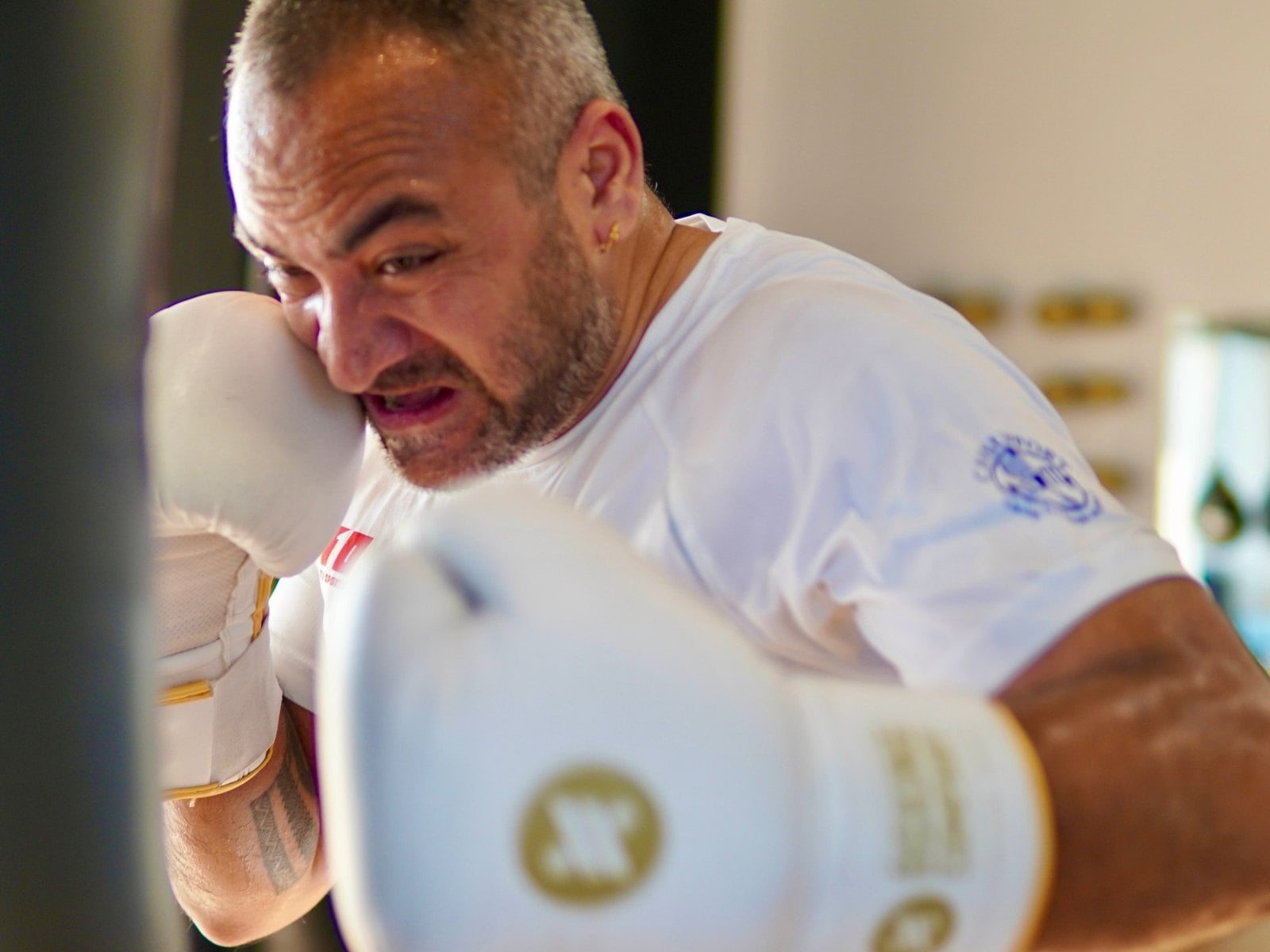
Why boxing fits fat loss so well
- A session burns meaningfully, 45 minutes of interval-style work with the big muscles of the hips and trunk doing the heavy lifting
- It builds and keeps muscle at the same time, unlike steady cardio alone
- The skill keeps you coming back, and adherence, not intensity, is the variable that predicts who succeeds at twelve months
“The best fat-loss programme is the one still running in month eight.”
The BOXLAB approach
We keep it unglamorous and effective: two to four sessions a week mixing boxing rounds with progressive strength work, a protein target you can hit with normal food, daily steps as the quiet background burner, and your measurements retested on schedule so decisions run on data instead of the bathroom mirror's mood.
What we don't prescribe: detoxes, fat-burner supplements, or punishment cardio for yesterday's meal. None of it survives contact with the research, and none of it survives contact with real life either.
Play the long game. It is the only one with a finish line.
Put the science to work
Train with the team behind the article, in the gym or from home.